

Businessman Mohammad Ali, who is already facing criminal charges in a multi-billion-shilling gold fraud case, has landed in fresh trouble after authorities discovered that a medical document used to facilitate his release from prison was allegedly forged.
Ali, who was remanded on April 19 over allegations of theft and cheating involving a fake gold transaction worth $2.4 million (about Shs 8.8 billion), had been expected to remain on remand until May 5 when he was scheduled to reappear in court.
However, in a surprising turn of events, the suspect walked out of prison earlier than expected after his lawyers secured a production warrant from Makindye Magistrate’s Court on medical grounds.
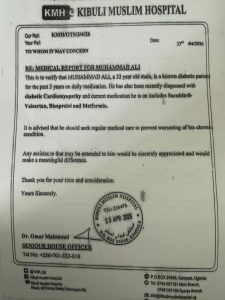
The lawyers allegedly presented a medical report purportedly issued by Kibuli Muslim Hospital indicating that Ali was diabetic and suffering from diabetic cardiomyopathy, a heart-related complication associated with diabetes.
The letter, dated April 23, 2026, claimed that the 32-year-old suspect had been diabetic for the past three years and was undergoing treatment involving several medications including Sacubitril-Valsartan, Bisoprolol and Metformin.
The report further advised that he required regular medical care to prevent deterioration of his condition.
The document was allegedly signed by one “Dr. Omar Mahmoud,” described as a Senior House Officer at the hospital.
But sources close to the investigations say authorities have since established that the medical report was allegedly forged, sparking plans to open a fresh criminal case against Ali and possible accomplices over forgery and uttering false documents.
The development has intensified scrutiny surrounding the controversial gold fraud case in which Ali is accused of defrauding Musa Muhammad, a director of MAPSCO General Trading LLC, during a fake gold deal involving 30 kilograms of gold.
Investigators allege that Ali and others still at large fraudulently obtained $2.4 million from the investor after falsely presenting themselves as genuine gold dealers.
When contacted for a comment regarding allegations that the medical document was fake, Ali referred this publication to the State House Anti-Corruption Unit (SHACU).
He also shared a phone number of an individual he claimed was handling the matter at the unit.
However, attempts to verify the claims were unsuccessful after it emerged that the individual whose contact was provided does not work at SHACU.
Authorities are now reportedly investigating how the alleged forged medical document was processed and whether there was collusion involving court or prison officials in facilitating Ali’s temporary release.
The case is expected to deepen public concern over sophisticated fraud syndicates operating within Uganda’s lucrative gold trade, which has in recent years attracted repeated complaints from foreign investors claiming to have been conned in fake gold transactions.