
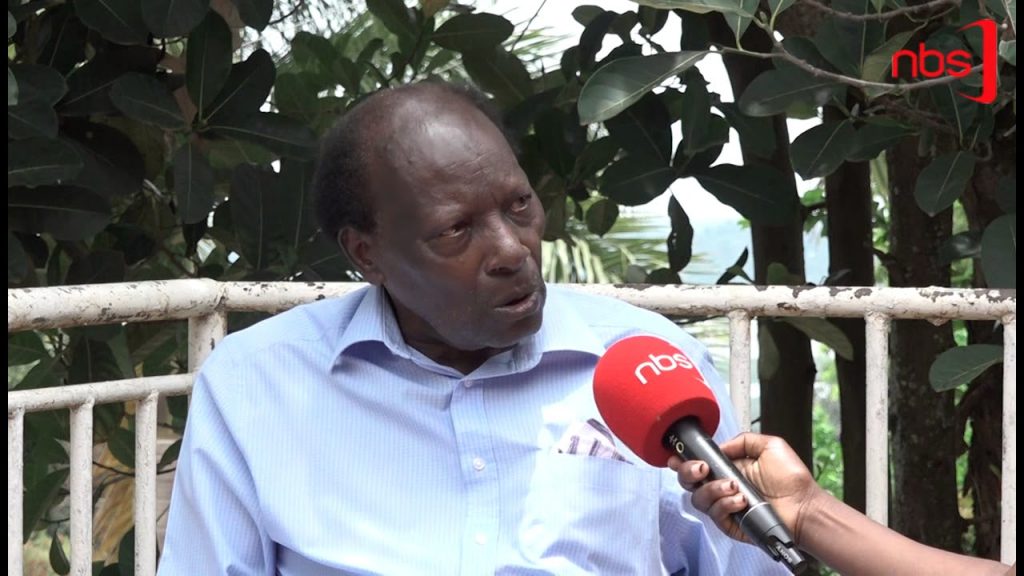
The family of retired Supreme Court Justice Prof. George Wilson Kanyeihamba has released the official burial program, confirming that the celebrated legal scholar will be laid to rest in Buziga, a Kampala suburb, rather than his ancestral home of Rubanda in southwestern Uganda.
The choice of burial location is notable, given that most prominent Ugandans traditionally opt to be buried in their native villages. However, family sources say Buziga—where the former jurist had lived in his retirement—was chosen as his final resting place.
Prof. Kanyeihamba, a towering figure in Uganda’s legal and political life, passed away on Monday, July 14, 2025, at the age of 85.
The family, in coordination with the government, has confirmed the following program:
Wednesday, July 23: Supreme Court Tribute at 2:00 PM
Friday, July 25: Family receives mourners at his Buziga residence from 11:00 AM, followed by Service and Tributes at 3:00 PM
Monday, July 28: Church Service at All Saints Cathedral, Kampala starting at 9:00 AM, then an Official Vigil at Kabojja International School, Buziga from 3:00 PM
Tuesday, July 29: Final Funeral Service at Kabojja grounds at 10:00 AM, followed by burial at his Buziga home
Prof. Kanyeihamba was born in Kinaba, Rubanda District, on August 11, 1939. Over his career, he served as Attorney General, Minister of Justice, and a Justice of the Supreme Court from 1997 until his retirement in 2009. He was also a lead architect of Uganda’s 1995 Constitution, having chaired the Legal and Drafting Committee of the Constituent Assembly.
He held a PhD in Law from the University of Warwick and taught in top institutions in both the UK and Uganda. In later years, he served as Chancellor of Kampala International University and Kabale University.
Justice Kanyeihamba is survived by his wife Susan, children Sarah, Joel, Ruth, and adopted daughter Betty Nabitosi Kanyeihamba.
Tributes have poured in from across the political and legal spectrum. He is being remembered as a fearless voice for human rights, judicial independence, and constitutionalism—a man who consistently stood for principle, even when it meant standing alone.