
The 2026 parliamentary elections delivered one of the most consequential political shake-ups Uganda has witnessed in recent years, with several senior Cabinet ministers suffering humiliating defeats at the ballot box.
Once considered political heavyweights with deep-rooted party machinery and state backing, these ministers were decisively rejected by voters, underscoring a growing appetite for change and accountability across the country.
The losses cut across key sectors of government, touching environment, foreign affairs, education, gender, trade, and regional development.
For many observers, the results signal a clear warning to the political establishment that incumbency and Cabinet status are no longer guaranteed shields against an increasingly assertive electorate.
Political analysts note that voter fatigue, local grievances, and heightened scrutiny of public officials played a significant role in shaping the outcomes. In several constituencies, long-serving ministers were defeated by relatively lesser-known challengers who capitalized on grassroots mobilization and public dissatisfaction with service delivery.
The defeats are particularly symbolic given that Cabinet ministers are often viewed as extensions of the executive arm of government. Their rejection by voters not only weakens their individual political standing but also raises broader questions about the future composition of Cabinet and the ruling party’s internal dynamics ahead of the next political cycle.
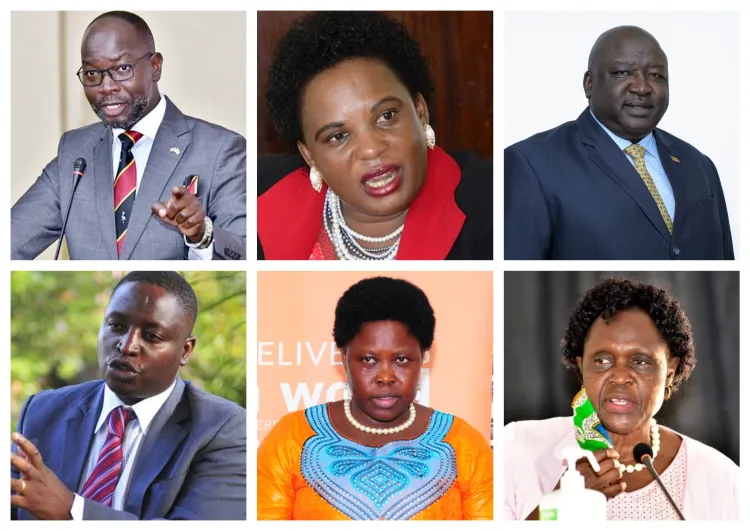
Below is the list of ministers who lost their parliamentary seats in the 2026 elections, along with the portfolios they held at the time:
Beatrice Anywar – Minister of State for Environment
David Bahati – Minister of State for Trade, Industry and Cooperatives (Industry)
Hamson Obua – Government Chief Whip
Betty Amongi – Minister of Gender, Labour and Social Development
Moriku Kaducu – Minister of State for Primary Education
John Mulimba – Minister of State for Foreign Affairs (Regional Affairs)
Okello Oryem – Minister of State for Foreign Affairs (International Affairs)
Frederick Ngobi Gume – Minister of State for Cooperatives
Florence Nambozo Wamala – Minister of State for Karamoja Affairs
As the dust settles, attention now shifts to how the executive will respond to the electoral verdict.
Traditionally, ministers who lose parliamentary seats face uncertain political futures, with many dropped from Cabinet during reshuffles.
However, the President retains constitutional discretion in appointing ministers from outside Parliament, leaving room for political maneuvering.
What remains undeniable is that the 2026 elections have reshaped Uganda’s political landscape. The message from voters is loud and unmistakable: performance, presence, and connection to the electorate matter more than titles. Whether this moment marks a turning point or a temporary tremor will be revealed in the choices that follow.