

A new door-to-door mobilisation drive dubbed “Dipo Ku Dipo” has taken root across Kampala Metropolitan and neighbouring towns, as ghetto youth intensify grassroots engagement ahead of the January 15, 2026 general elections.
The initiative, which involves moving house-to-house in ghetto communities, is urging residents to turn out and vote for President Yoweri Kaguta Museveni, then peacefully return to their homes to await election results.
The ghetto youth mobilisation is an idea championed by Major Gen. Christopher Damulira, the Director of Crime Intelligence, and is being coordinated on the ground by Maj Emmanuel Kuteeesa, who oversees the organisation of ghetto structures across Central Uganda.
The two officers have over time spearheaded the transformation of informal ghetto groupings into organised, disciplined and economically active units.
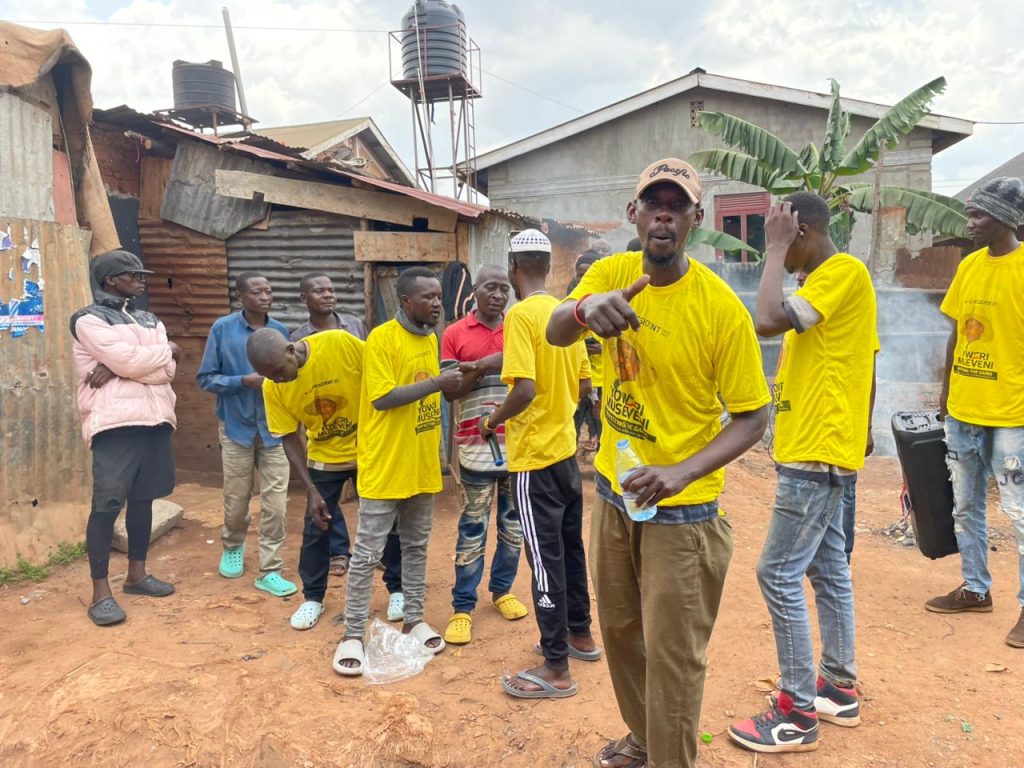
Under the Dipo Ku Dipo campaign, ghetto youth are also calling on their peers to reject violence and avoid being drawn into confrontations with the state.
Mobilisers are warning against attempts by opposition groups, including the National Unity Platform (NUP), to lure unemployed or frustrated youth into street protests and clashes during the election period.
The campaign is already visible in Makindye, Nakawa, Nansana, Mukono and Kampala Central, where youth groups are conducting coordinated door-to-door outreach, presenting themselves as ambassadors of peace, order and civic participation.
Organisers say the strategy is rooted in lessons learned from past elections, where post-poll unrest disproportionately affected ghetto communities.
The Dipo Ku Dipo mobilisation builds on years of groundwork laid through ghetto empowerment initiatives under Maj Gen Damulira’s leadership.
Central to this approach has been the formation of SACCOs among ghetto youth and boda boda riders, which have served as platforms for financial inclusion, discipline and organisation.
Recently, at Growers Playground in Kawempe, Maj Gen Damulira handed over 300 motorcycles to boda boda riders affiliated with Kawempe SACCOs.

The motorcycles were procured using the shs 100 million that President Museveni injected into each SACCO as part of a broader effort to tackle unemployment and crime in high-density urban areas. Beneficiaries were urged to prioritise work, obey traffic laws and avoid unproductive political activities.
According to security and community leaders, the success of SACCO-based empowerment has “neutralised” many ghetto youth who were previously vulnerable to criminal or violent political mobilisation.
With livelihoods stabilised, the same structures are now being used to promote peaceful participation in the electoral process.
The Dipo Ku Dipo campaign marks a new phase in the ghetto youth strategy—one that blends economic empowerment with political mobilisation, while emphasising order, restraint and stability during the 2026 elections.